

Customer Centric Marketing in India: Strategies and Benefits
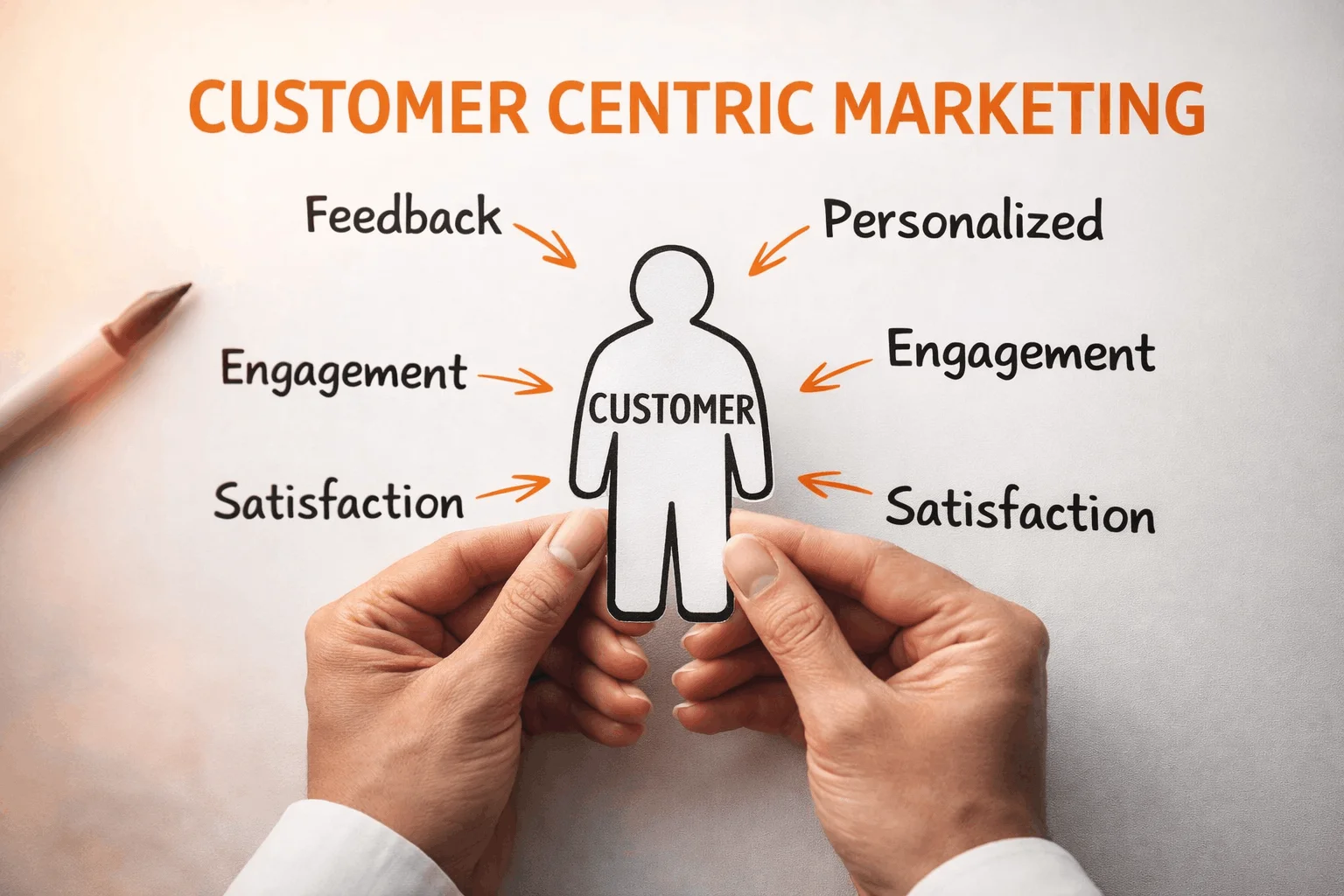 The current business environment in India requires brands to use customer centric marketing methods because consumer expectations are changing at a rapid pace. The strategy directs organizations to shift their focus from product development methods towards understanding and meeting customer requirements through every interaction point.
Brief Understanding of Customer centric marketing
Customer centric marketing establishes the customer as the central element for all marketing activities. Through customer centric marketing companies implement their marketing activities based on customer information. Businesses need to understand customer needs and behaviors together with their challenges to create customized solutions which establish trust and foster customer loyalty. The philosophy shifts to treat customers as brand partners who use data to create value at all touchpoints instead of pushing products to the market. The Indian market needs businesses to provide their customers with multiple channels that create smooth shopping experiences throughout their various digital touchpoints.Developing The Customer Centric Marketing Strategy
A company needs to start developing its customer-centric marketing strategy by collecting ongoing data which can be obtained through social listening and customer feedback methods.The brand uses social listening and customer feedback to gather real-time data, which forms the basis for their customer-centric marketing strategy. The brand uses behavioral and preference data to create audience segments, which allow them to create custom marketing campaigns that meet particular customer requirements. The approach requires organizations to use full-funnel marketing through technology, which generates predictive customer insights to create personal experiences. The Indian market uses mobile-first strategies because of its high smartphone penetration to connect with users who are in motion.
Benefits Of Customer Centric Marketing
There are numerous competitive advantages of adopting a customer-centric marketing strategy that result in an increase in customer loyalty, as well as additional opportunities for growth through repeat business from customers. Some examples of these competitive advantages include:- Customer loyalty One of the most effective ways for businesses to grow is by adopting a customer-centric marketing approach. A study found that customers who were treated as valued customers (providing exceptional service and support) were more likely to return to the company when a brand was offered and reported that brands with a customer centric strategy have seen revenues increase by 60% compared to brands without a customer-centric strategy.
- Greater Engagement with Clients When a company sends messages to its clients; they'll be more likely to respond because there's a personal touch included in the message. When a company shows its consumers additional support and assistance, they'll become more engaged and will likely respond to requests for feedback at higher levels of frequency than those who don't receive a personalized message from the company.
- Increased Customer Re-Engagement Rates The customer experience management (CEM) market in India is projected to grow at a compound annual growth rate (CAGR) of 17.5 percent from 2025-2032 because organizations are using proactive customer service/solution solutions and personalization to increase the likelihood of customers returning to their organizations after one or more purchases.
- Customers become advocates for brands Companies transform their content into promotional materials which customers share with their friends. Satisfied customers who refer brands to others generate organic growth for the brand through word-of-mouth and recommendations.
- Competitive edge The creation of a distinct customer experience through exceptional product and service features leads to a competitive advantage which enables businesses to achieve faster revenue growth and reach more customers than their less customer-oriented competitors.
Companies achieve market supremacy through exceptional customer experiences which create a competitive edge over their rivals who fail to prioritize customer needs.
Navigating the Customer Centric Market
The focus on customer needs can improve business performance for companies that operate in competitive markets. The customer-centric market requires businesses to compete through their ability to provide outstanding customer experiences beyond delivering products. The customer experience management market in India shows strong growth because businesses adopt digital technologies and artificial intelligence solutions. Customers expect businesses to provide them with transparent information and personalized services, requiring companies to use data analytics for product development which maintains market relevance across e-commerce and finance fields.Adopting a Customer Centric Marketing Approach
A customer-centric marketing approach emphasizes empathy and agility. The process requires mapping out customer interactions to find areas for improvement while creating a workplace culture which enables staff members to make decisions based on what customers expect. The organization must establish procedures which enable it to address customer feedback at any moment while using insights for ongoing product development. Indian companies should implement local cultural elements into their communication strategy by using regional languages to better connect with their target demographic.Exploring the Customer Centric Marketing Model
The customer-centric marketing model establishes interlinked cycles to track customer progress through their complete journey. The system uses multiple data sources to create user profiles that enable organizations to develop predictive models and flexible operational strategies. The system core needs audience knowledge that exceeds basic demographic factors together with the ability to evaluate audience behavior through all touchpoints and their resulting content and satisfaction outcomes. The model uses omnichannel consistency to build unified customer experiences, which create deeper customer relationships between companies and their clients.Customer Centric Marketing and Personalized Video Marketing
The combination of customer-centric marketing and personalized video marketing leads to increased customer engagement through the delivery of customized video content that matches viewer preferences. Personalized videos use customer information about their names and their previous purchases and their current location to create personalized interactions. The tool enables customer-centric frameworks to establish stronger viewer connections because it creates more engaging content than ordinary videos. The high video consumption of Indian audiences enables personalized video marketing to capture diverse audience preferences through regional festivals and local trend content, which increases customer loyalty and conversion rates.The current business environment allows Indian brands to achieve success through their ability to create exceptional customer experiences because all elements of this system work together in harmony. The shift helps organizations attain modern customer demands while creating pathways for business expansion.
Read More About:- Automated Marketing Campaign With AI 2026